Printable alphabets & letters worksheets
17 alphabets & letters packs for ages 3–6 — 243 printable pages in total. Beginning sounds, ending sounds, vowels, sentences
Every sheet prints on A4 and US Letter. Included with any activity pack, or take all 3547 pages in the library.
Unlock all 17 alphabets & letters sheets
Included in every activity pack, or take all 3547 pages in one go.
Capitals first, then small letters
Almost every early-years curriculum teaches capitals before lowercase, and the reason is mechanical rather than traditional: capitals are built from straight lines and simple curves, while lowercase letters need loops, ascenders and descenders that sit relative to a line. A child who can write A B C is ready for a b c; the reverse is much harder.
Recognition comes before writing
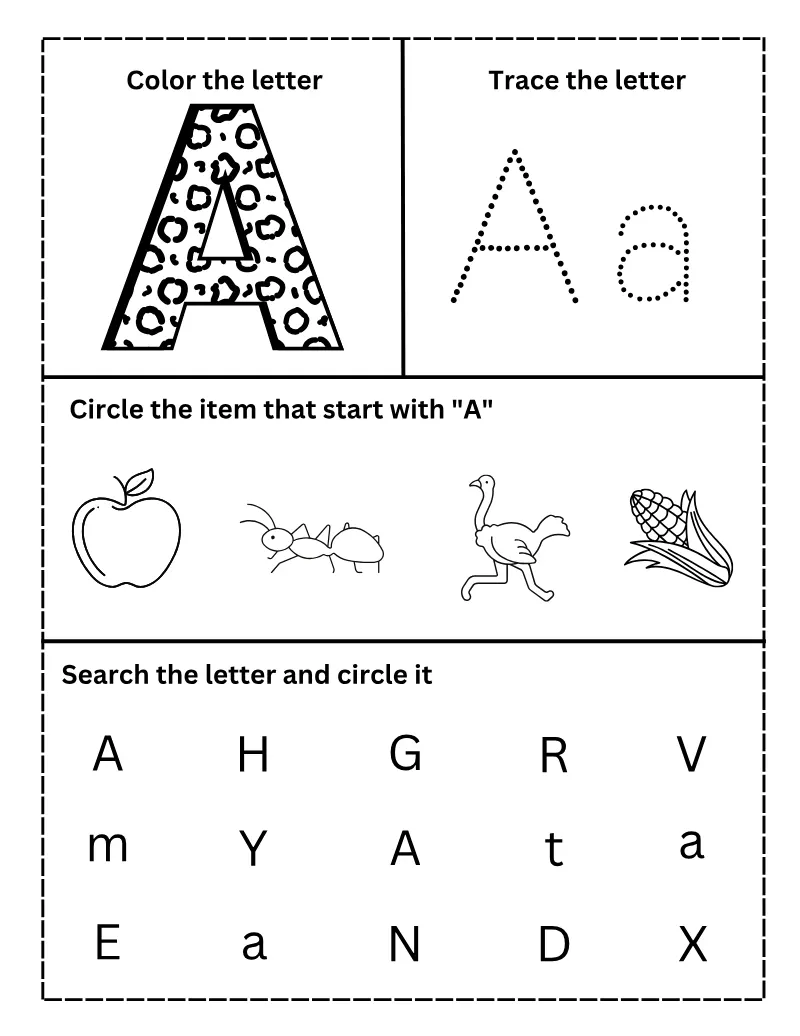
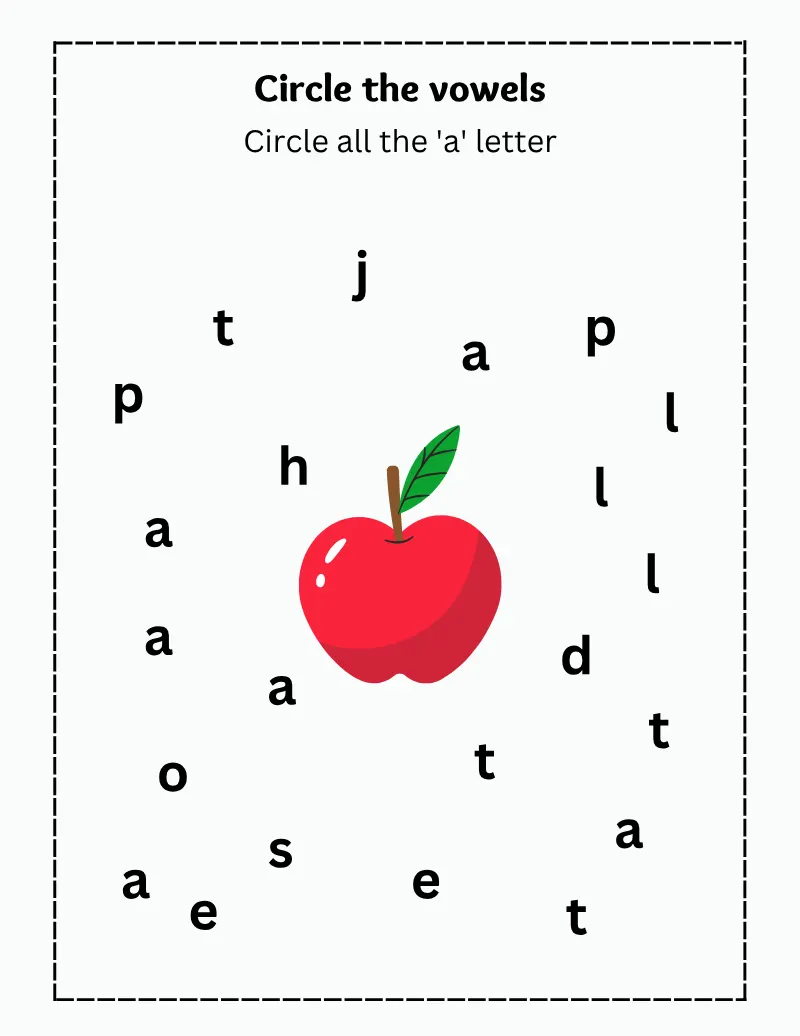
A child can usually point to the letter M months before they can draw one. Letter recognition worksheets — circle the M, match the letters, find the odd one — are doing real work even though no writing happens on them. It is worth spending longer here than most parents expect.
Letters and the sounds they make
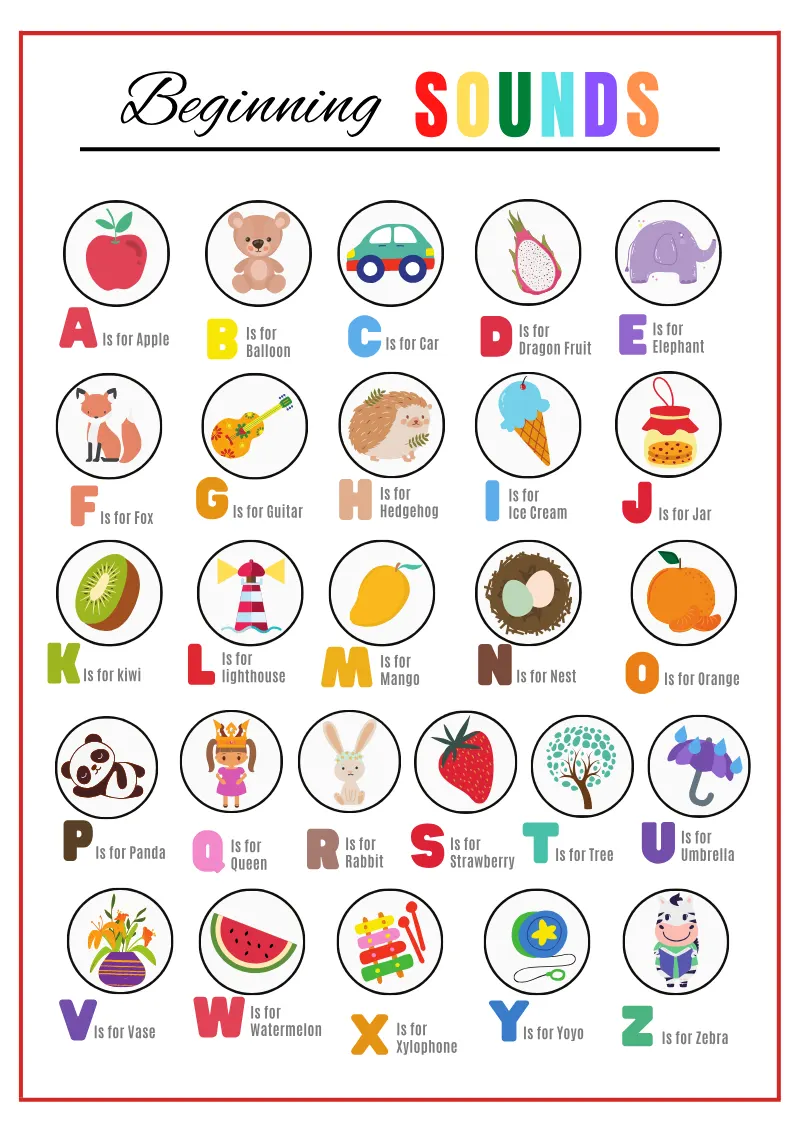
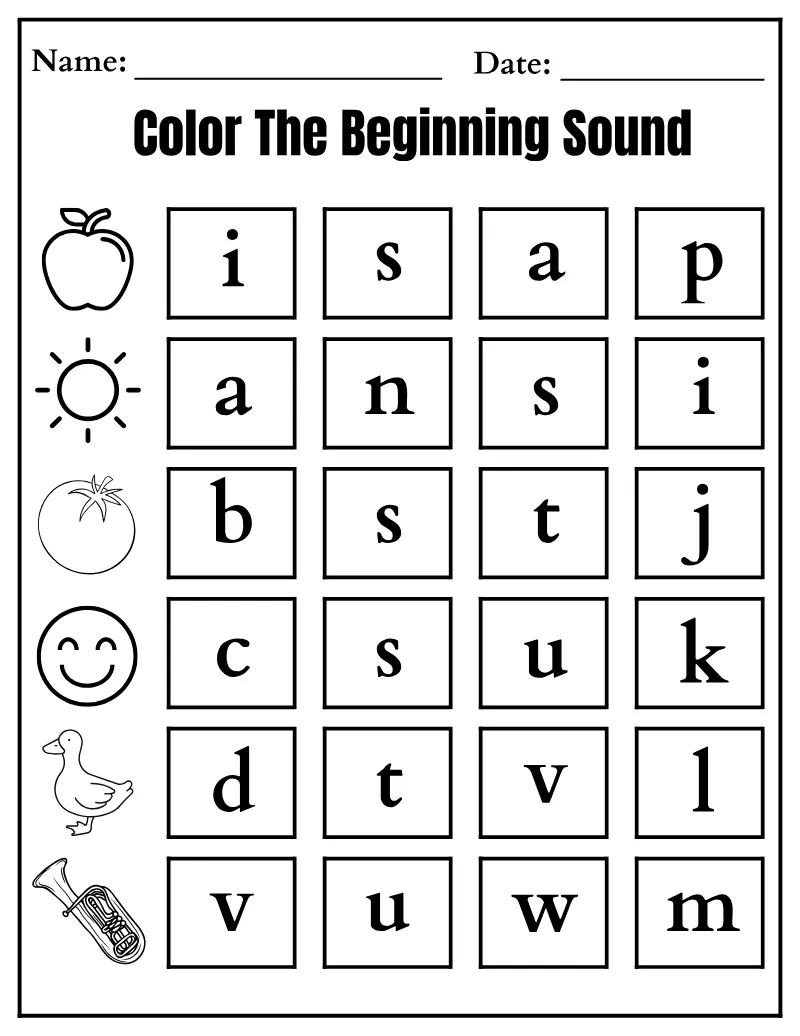
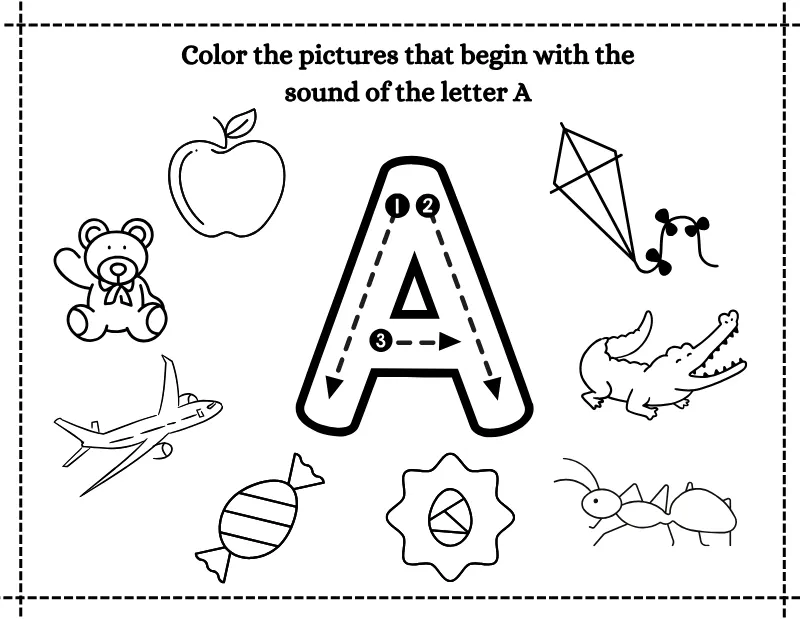
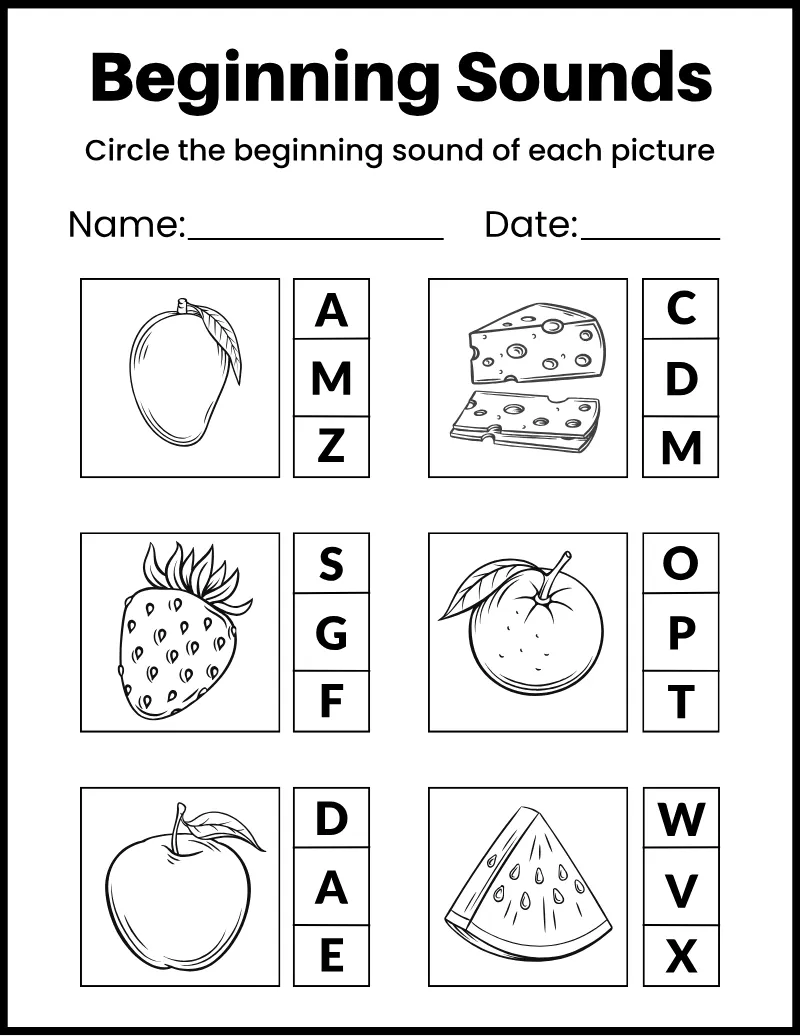
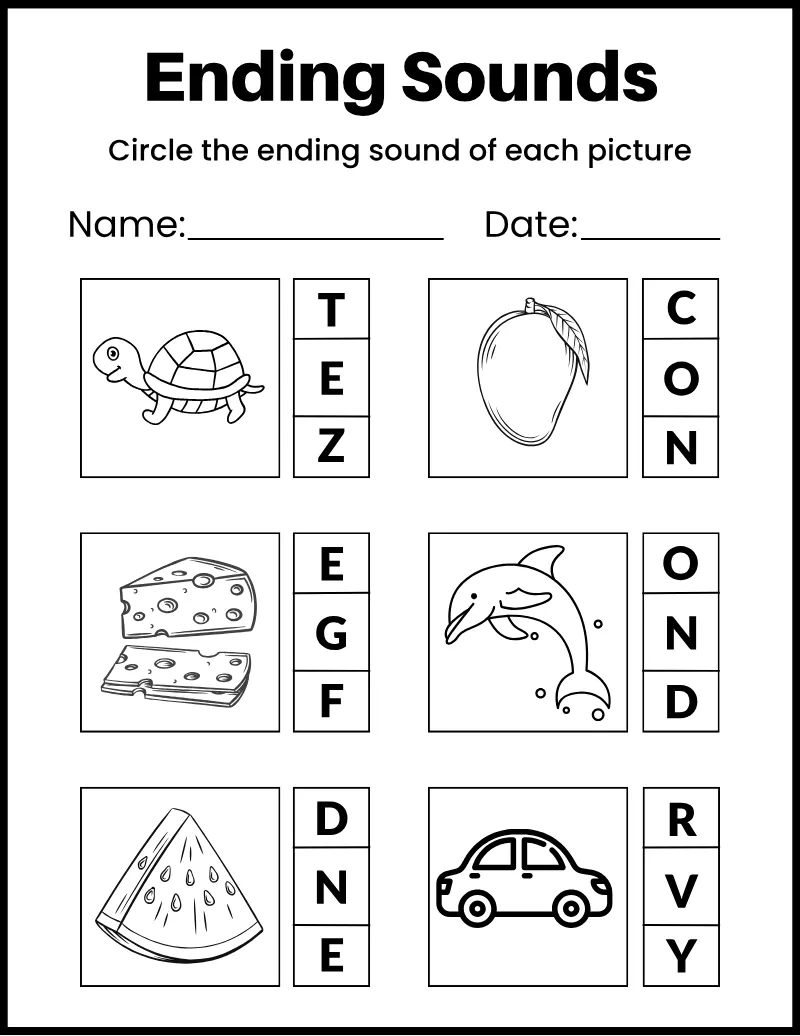
Knowing the name of the letter B and knowing it says /b/ are separate facts, and reading depends on the second. Beginning-sound pages pair each letter with words that start with it, which is the bridge from alphabet practice to actually reading.
A realistic pace
Two or three letters a week suits nursery, with older letters revisited rather than assumed. Most children learn the letters in their own name first regardless of order, so starting there is usually more effective than starting at A.
Alphabets & Letters worksheets — common questions
Should my child learn capital or small letters first?
Capitals. They are made of straight lines and simple curves, which a young hand manages far more easily than the loops and descenders of lowercase.
At what age should a child know the alphabet?
Most children recognise many letters by four and can write most capitals by five or six. Recognition arrives well before writing — that gap is normal.
Which letter should we start with?
The first letter of the child's name, almost always. It carries meaning for them, which makes it stick faster than A.
What is the difference between letter names and letter sounds?
The name of the letter is 'bee'; the sound is /b/. Reading is built on the sounds, so both are worth teaching, but the sound is what unlocks words.